
Thérapie Alternative Nyon & Région : The gentle approach to regaining your balance
You live on La Côte, perhaps between Nyon, Coppet and Rolle ? Do you feel like you're running out of time, between commuting, work responsibilities and family life? And in the midst of it all, your body is starting to send warning signals.
Perhaps you've already consulted your GP. The tests are good, «everything's fine» on paper. And yet you don't feel well. You're feeling that deep-seated tiredness, that backache that's coming back, that anxiety that's squeezing your chest.
If you're on this page, it's because you're looking for something else. A complementary path. A alternative therapy that doesn't just silence the symptom, but takes the time to listen to you as a whole person. Welcome to my office. I'm Johanna, and in my practice at Acorn (5 minutes from Nyon), I'll help you reconnect your body and mind.

Why turn to alternative medicine in the Lake Geneva region?
Our region is magnificent, between lake and mountains. But it's also a high-pressure area. À Nyon and the surrounding area, the performance culture is everywhere. Many of my clients are executives, entrepreneurs or parents who forget themselves in order to «keep things moving».
The limits of the purely mechanical approach
Allopathic (conventional) medicine is fantastic for emergencies and pathological injuries. If you break your leg, go to emergency at Nyon Hospital! But for chronic ailments, stress, general malaise or psychosomatic pain, the chemical approach sometimes has its limits.
Choose a alternative medicine or complementary, is not to «reject science». It means choosing to broaden the spectrum. It means accepting the idea that your body is not a machine made up of individual parts, but a complex ecosystem in which everything communicates: your organs, your muscles, your emotions and your energy.
Le Grand Flou: Which alternative therapy should I choose?
When you type «Thérapeute Nyon» or «Natural care Vaud» On Google, you come across a jungle of suggestions. Osteopathy, psychology, naturopathy, magnetism, reiki... It's normal to be lost. Let me help you see more clearly and tell you where my approach (Kinesiology) fits into this landscape.
Kinesiology vs Psychology
In verbal therapy (psychotherapy), you use your mind to understand your mind. This is essential, but sometimes you go round in circles intellectually without any change in the way you feel. In kinesiology, you go through the body. We look for information stored in the cellular memory. It's ideal if you've already analysed your problems but still feel emotionally blocked.
Kinesiology vs Osteopathy
The osteopath manipulates the structure (bones, fascia) to restore mobility. It's a fantastic manual therapy. The kinesiologist, on the other hand, works on the muscle tone and nervous information. The two approaches are incredibly complementary.
Kinesiology vs Naturopathy
Naturopaths work on the biochemical level (diet, plants). In kinesiology, we also touch on this aspect via energetics and sometimes lifestyle advice, but we use the muscle test to check what your body is tolerating or demanding at any given moment.
My approach: Kinesiology as a central pillar
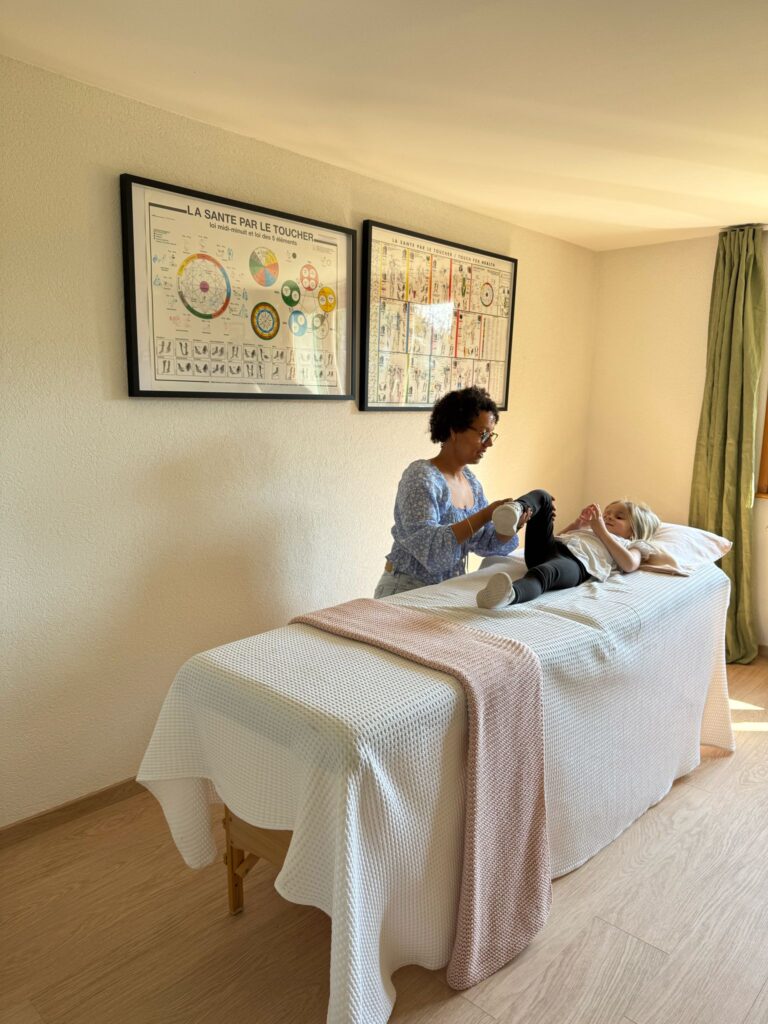
Why is kinesiology often referred to as the «Swiss Army knife» of the medical profession? alternative therapies ? Because it is systemic. It is not limited to a single entry point.
In my practice in Gland, I use a varied «Toolbox» which draws on the best of several worlds:
- Energetics (Traditional Chinese Medicine) : We work on the meridians and the circulation of Chi, as in acupuncture, but without needles (using acupressure or sweeping).
- Stress Management (Neuroscience) : We use emotional stress release techniques to calm the limbic brain (the seat of emotions) and reactivate the prefrontal cortex (the seat of thinking).
- Bach Flower Remedies (Floratherapy) : These elixirs are powerful emotional harmonisers to help you through periods of transition.
- Motor skills (Brain Gym) : Specific movements to reconnect the body and brain, essential for learning and mental clarity.
What my customers say!



Who do you work with? The profiles I work with on the Côte d'Azur
There's no such thing as a «typical profile» for alternative therapists, but here are the problems I most often encounter with clients from Nyon, Prangins, Eysins and Begnins.
1. The «Super-Actives» on the brink of Burn-Out
You've got a job with responsibilities, you're commuting, you're managing a team... and you feel like the rope is going to give. You sleep badly, you're irritable, you have palpitations. Here, we don't judge your performance. We help your nervous system to switch back into «Parasympathetic» mode (the recovery mode). We empty the pressure cooker before it explodes.
2. Women and Life Cycles
From puberty to the menopause, through pregnancy and post-partum, women's bodies go through hormonal and energetic storms. Kinesiology is a alternative medicine very respectful in supporting these transitions, managing menstrual pain, fertility problems (with medical support) or the mental burden on the mother.
3. Children and Teenagers (Schooling and Emotions)
The school system in the canton of Vaud can sometimes put a lot of pressure on children. Dyslexia, ADHD, lack of concentration, exam anxiety, bullying... Children quickly become somatised (stomachaches before school). Because kinesiology works through the body and movement (Brain Gym), it's very fun and effective for them. They don't need to «talk for hours», the body tells the story for them.
4. Pain with no medical cause«
You've had X-rays, MRIs, seen specialists... «There's nothing wrong with you, Sir/Madam». There's nothing wrong with you, Sir/Madam". But you are in pain. This pain is often psychosomatic. The body crystallises an undigested emotion. Releasing the emotion often releases the associated physical tension.
Do you recognise yourself in any of these profiles?


The «Swiss Frame»: Security, reliability and reimbursement
The term «alternative» can sometimes be frightening. People imagine anything and everything. That's why it's crucial to choose a therapist who operates within a strict ethical framework.
The importance of ASCA accreditation
I am ASCA-certified therapist (Swiss Foundation for Complementary Medicine). It's not just a logo on a website. It means :
- That I have followed a complete training programme, validated by exams.
- That I am trained in anatomy, physiology and pathology (Cycle 1) to understand the human body and know my limits (I know when to send you to a doctor).
- That I am bound to professional secrecy. Everything that is said in my practice in Gland remains within these four walls.
Reimbursement by supplementary insurance companies
Most supplementary insurance companies in Switzerland (Groupe Mutuel, Helsana, Swica, etc.) recognise the benefits of kinesiology and cover part of the cost of sessions under the ASCA label. I invite you to call your insurance company to check your «Natural Medicine» cover.
Why Gland is the smart choice (vs Nyon Centre)
If you search for «Thérapeute Nyon», you naturally think of the town centre. But let's be honest: parking in Nyon has become a combat sport, and the stress of traffic before a relaxation session is counter-productive!
My practice is located in Acorn, This is a natural extension of the Nyon urban area, but with some major advantages:
- Zen accessibility : No endless traffic jams.
- Easy parking : You won't turn around for 20 minutes to find a place.
- Public transport : Close to the station, within easy reach of Rolle, Coppet and Geneva.
It's a geographical choice designed to give you peace of mind. The session starts as soon as you leave home, with no stress.

Frequently asked questions!
How does an initial alternative therapy session work?
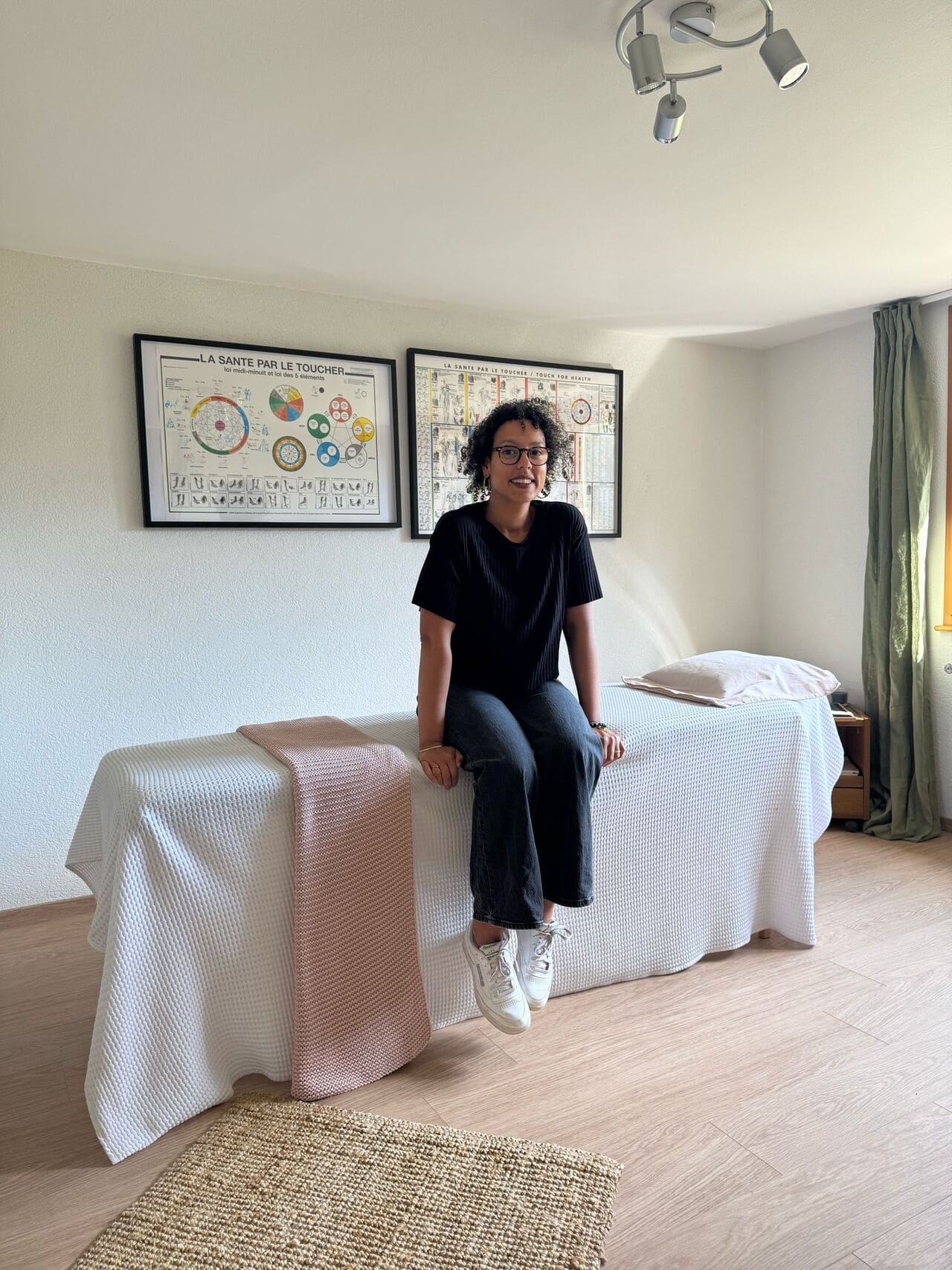
If you're new to alternative medicine, here's what to expect. No eye-stinging incense or strange rituals. Just a pragmatic, caring approach.
1. Welcome and Objective
We begin with a verbal exchange. We take stock of your overall health, your history and, above all, what's brought you here today. Together, we set a goal. For example: «Get back a good night's sleep» or «Feel legitimate at work».
2. Dialogue with the Body
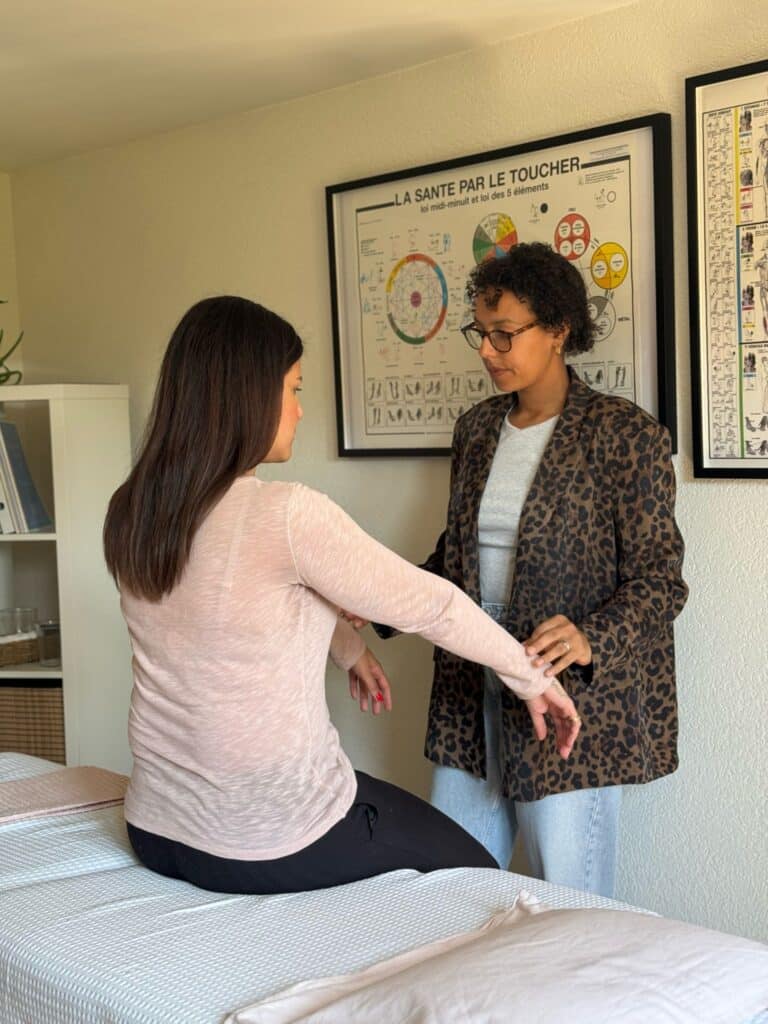
You sit down (dressed) on the table. I use the muscle test (light pressure on the arm) to question your body. «Is the blockage structural? Emotional? Energetic?» «Is there a fear linked to this objective?» It's an exciting investigative phase where you become aware of your own mechanisms.
3. Balancing
Depending on your body's responses, I apply corrections. This may involve stimulating reflex points (neuro-lymphatics), eye movements, visualisation or Bach Flower Remedies.
4. Anchoring and Autonomy
You often leave with (very simple!) «homework». A movement to make in the morning, a phrase to repeat to yourself... The aim is to make you autonomous. I don't want you to be dependent on me. I want you to rediscover your own capacity for self-healing.


