14 basic kinesiology tests
Discover the 14 fundamental tests of kinesiology and their role in energy balance and emotional management.
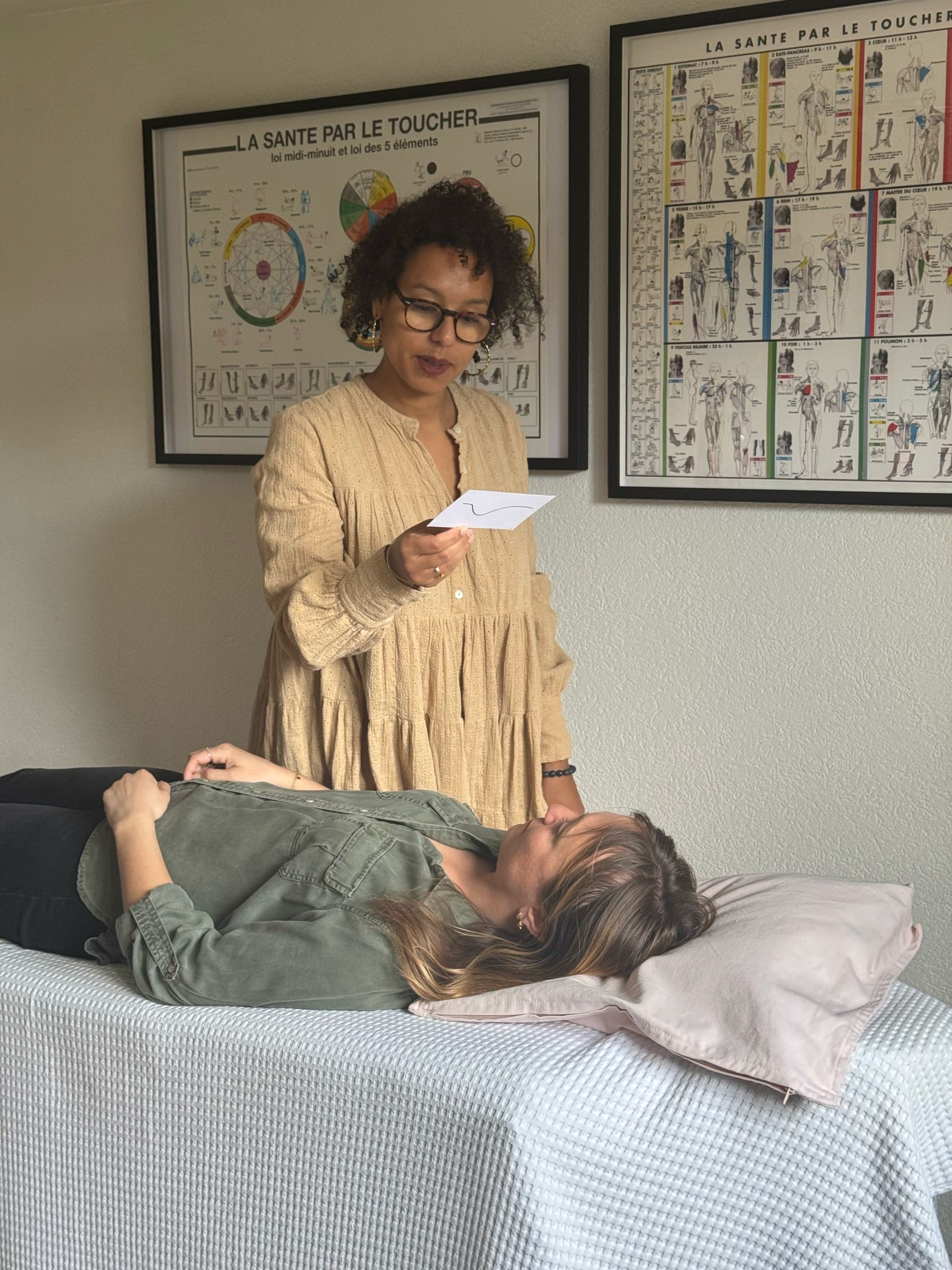
Muscle testing is at the heart of kinesiology. They enable the body to be questioned in order to identify any energy imbalances. More specifically, there are 14 basic muscles, each corresponding to an acupuncture meridian derived from the Traditional Chinese Medicine (TCM). These correspondences were highlighted by Dr John Thie in his reference book Touch for Health (Health through touch).
The aim of these tests is to detect energy imbalances in the body:
- Energy voids, which indicate muscle weakness or a blockage.
- Excess energy, These can be identified by assessing alarm points.
Once these imbalances have been identified, the aim is to rebalance the circulation of energy, using a variety of techniques to restore physical and emotional harmony.

Master the fundamental kinesiology tests
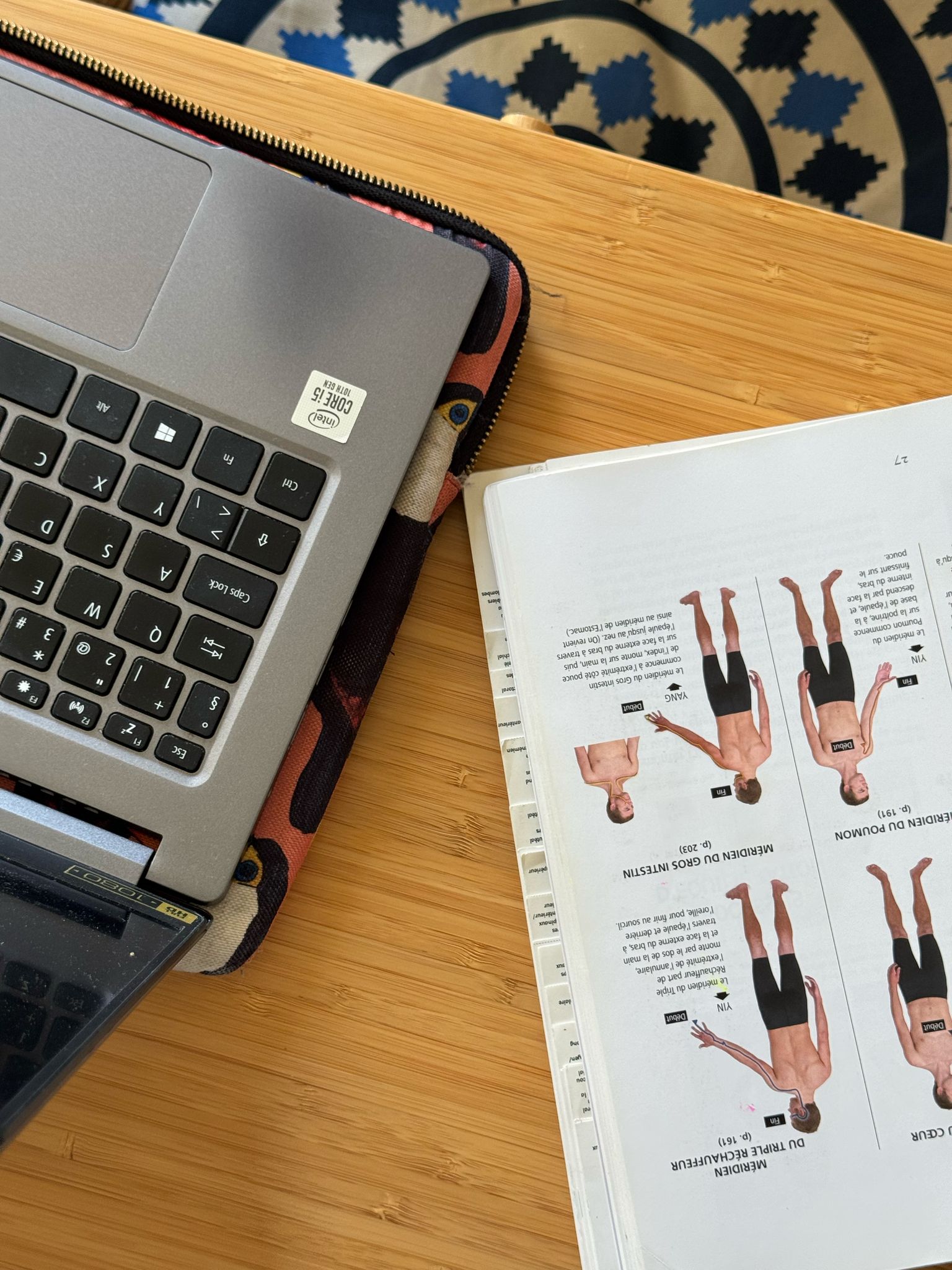
Mastering the 14 muscle tests is essential for any kinesiology practitioner. It is the health through touch and, by extension, applied kinesiology.
How do you learn these tests?
- Practising regularly Repetition is the key to integrating these tests.
- Knowing each muscle and its associated movement A good kinesiologist must identify the precise reaction of the muscle being tested.
- Respecting posture and technique tests can be carried out in the stand or lying. Each test involves a precise movement, a area to be held by the practitioner, and a gentle push to assess muscle response.
Correspondences between meridians and muscles
Each muscle tested in kinesiology is linked to an energy meridian. Here is the list of 14 basic muscles and their associated meridians :
- Conception vessel: supraspinatus
- Governor ship: large round
- Stomach: clavicular pectoralis major
- Spleen-Pancreas: greater dorsal
- Heart: subscapular
- Small intestine: quadriceps
- Bladder: fibular
- Kidney: psoas
- Heart master: gluteal medius (gluteus medius)
- Triple Warmer: small circle
- Billiary vesicle: anterior deltoid muscle
- Liver: sternal pectoralis major
- Lung: serratus major (serratus anterior)
- Large intestine: Fascia-lata tensor

Why are these tests essential?
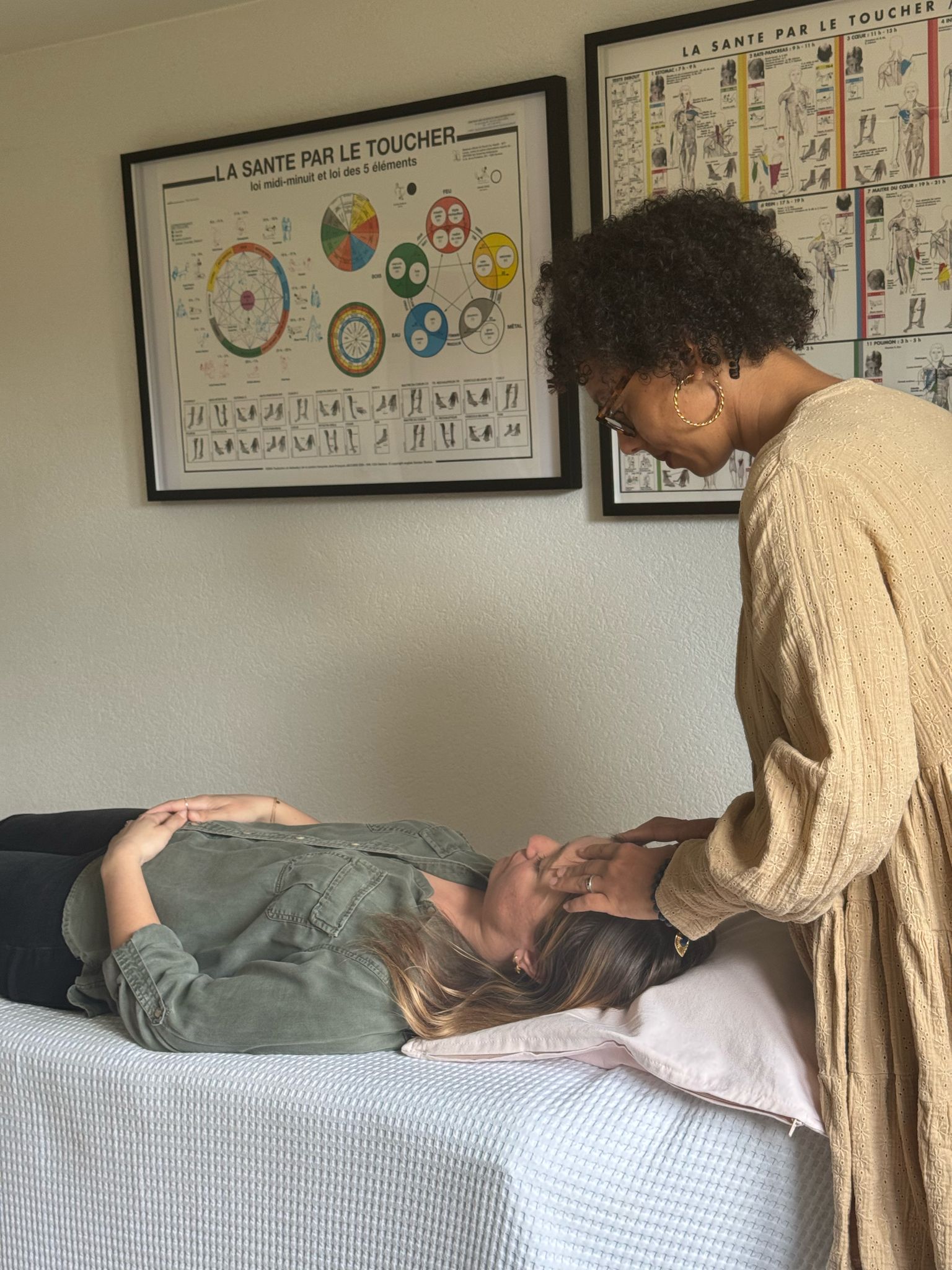
Assessment of the muscles and meridians enables :
- Understanding the sources of physical and emotional tension.
- Identify energy blockages and their impact on overall health.
- Implement energy corrections to promote well-being and balance.
Mastering these tests is therefore essential for anyone wishing to practise kinesiology.
What my customers say!



The 14 muscle tests form the basis of kinesiology. Not only do they help to identify energy imbalances, but above all they enable targeted corrections to be made to restore harmony between body and mind. It is thanks to these tests that kinesiology can offer a detailed understanding of what your body is expressing, beyond words.
If you'd like to find out more about how these tests can help you manage your stress, anxiety and emotional blockages, I invite you to book a kinesiology session at my practice in Gland (Vaud).