Kinesiology and muscle testing: an essential tool for restoring balance
Visit kinesiology, Muscle testing is the central tool for questioning the body and accessing information that is often unconscious. It makes it possible to identify blockages and stress, and then to restore the body's energetic balance.

The principle of muscle testing in kinesiology
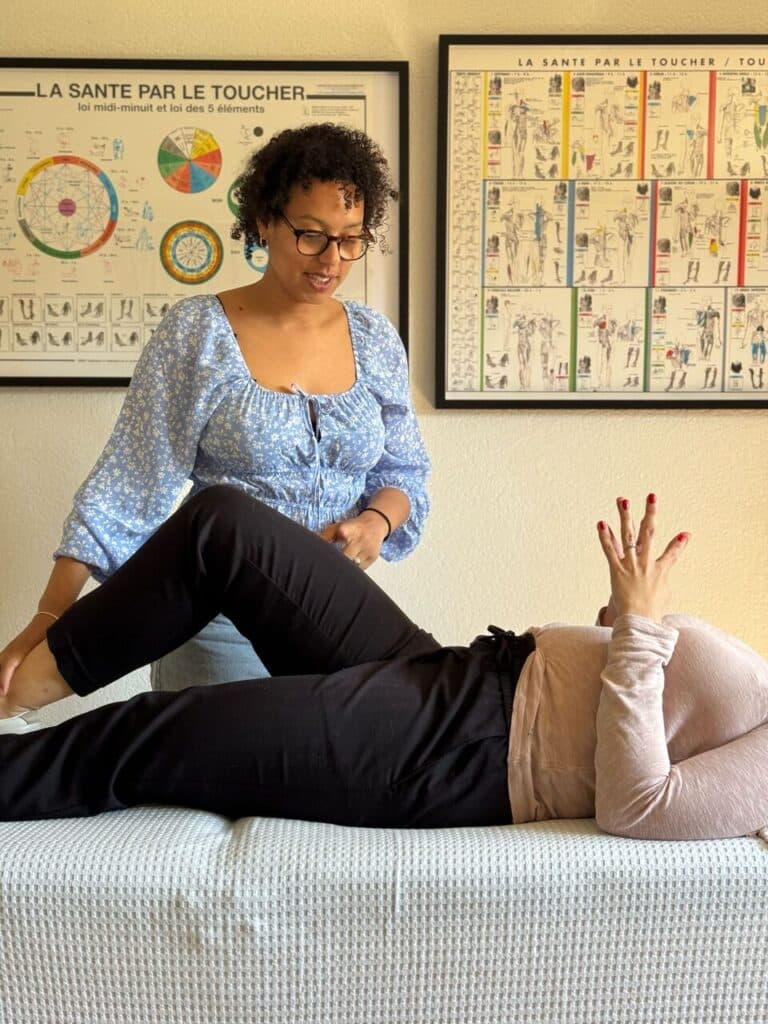
The principle of muscle testing is simple: to question the body through its muscles. It's all based on the close link between stress and muscle tone. Common expressions such as «my legs feel like they've been chopped off» or «my arms feel like they've been chopped off» illustrate this phenomenon: in the face of stress, muscle tone relaxes.
This relaxation, known as «unlocking», is used as an indicator. When a muscle remains locked, it means that the information evoked is not stressful for the body. Conversely, a muscle that relaxes indicates stress or a blockage, whether conscious or not.
A reliable indicator of energy balance
The muscle test is used to check whether energy is flowing freely through the body. When everything is in balance, homeostasis (the natural state of equilibrium) is maintained and the muscles remain locked. If there is an imbalance, physical, emotional or mental stress can cause muscle tone to relax. The causes of these imbalances can be many: emotional, psychological, dietary, environmental or even transgenerational. This is why muscle testing is used at every stage of a kinesiology session: from defining the objective to choosing the necessary corrections.
The biomechanical and energy mechanism
Muscle testing is based on biomechanical and energetic principles. It measures the muscular response to a specific stimulus, revealing the impact of emotions, thoughts or external factors on the body. This approach provides access to information that the individual cannot always access through reflection alone.


In practice: how does the muscle test work?
During a session, the muscle most often used is the anterior deltoid, located in the upper arm. It is practical to test because it allows gentle, precise pressure.
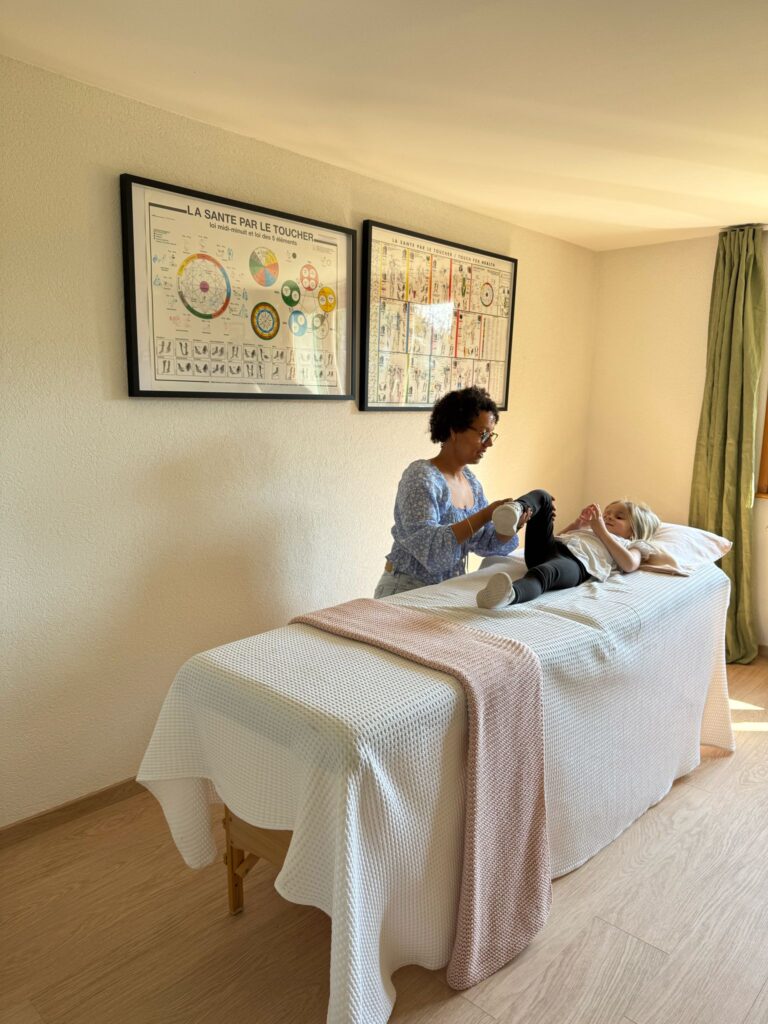
The therapist applies gentle pressure while the person holds a specific position. Depending on the response of the muscle, whether locked or relaxed, the therapist identifies the presence of stress, refines the objective of the session and determines the techniques to be used to restore energy balance.
What training is needed to master muscle testing?
In Switzerland, becoming a kinesiologist requires several years' training, including around 500 hours devoted specifically to kinesiology. Muscle testing, for its part, can be learned in a few minutes, requires a few hours' practice to be correctly applied, and is perfected over months and years of experience.
Kinesiology, chiropractic and osteopathy: what are the differences?
Unlike chiropractic or osteopathy, the aim of kinesiology is not to diagnose or manipulate the body solely on a mechanical level. Chiropractic and osteopathy aim to correct structural and musculoskeletal imbalances to relieve pain and improve mobility.
Kinesiology, on the other hand, offers a holistic approach, taking into account the physical, emotional and energetic levels. Muscle testing enables us to explore the underlying causes of imbalance, to act on vital energy and to stimulate the body's natural self-regulation capacities.
The kinesiology muscle test is a reliable tool for identifying blockages and restoring the body's energetic balance. By questioning the body directly, this gentle and effective method provides access to valuable information and promotes a return to a state of general well-being.